


Hand Surgery
Advanced Care to Keep Your Hands Functioning
Our committed team specializes in addressing hand and upper extremity issues. Concentrating on conditions like carpal tunnel syndrome, trigger finger, Dupuytren’s disease, and ganglion cysts, our surgeons provide both non-surgical and surgical options to improve function and reduce pain. We are dedicated to offering personalized care, guaranteeing that each patient receives the most suitable treatment customized to their specific needs.

Plastic & Reconstructive Surgeon
Dr. Noor Alolabi
Dr. Noor Alolabi is a plastic and reconstructive surgeon certified by the Royal College of Physicians and Surgeons of Canada, with fellowship training in hand, wrist, and peripheral nerve surgery. His expertise encompasses complex reconstructive procedures that restore form and function.

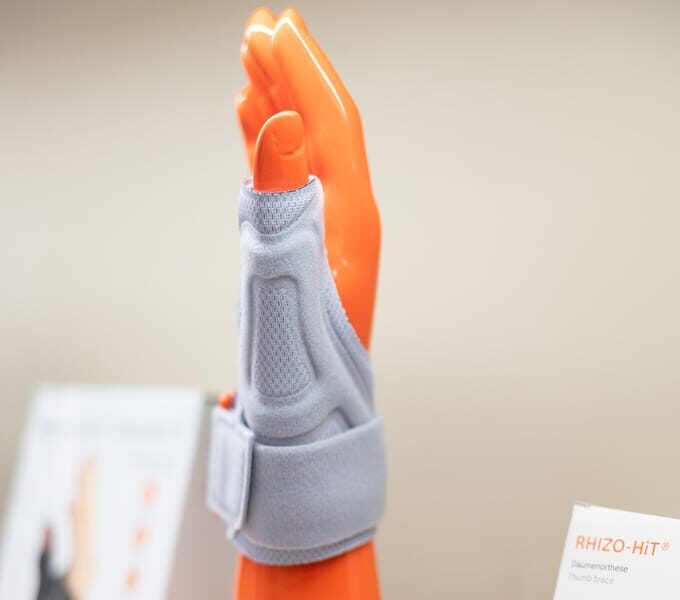
Carpal Tunnel Release: Eliminating Tingling and Restoring Comfort
At Panacea Clinic, we combine surgical expertise, advanced technology, and compassionate care to help you achieve your aesthetic goals with confidence. Our board-certified surgeons specialize in personalized treatment plans designed to enhance your natural beauty while prioritizing safety, comfort, and lasting results. From minimally invasive treatments to transformative surgical procedures, every patient benefits from our state-of-the-art facilities, our accredited standards of excellence, and a dedicated team committed to delivering exceptional outcomes in a supportive and welcoming environment.
Causes
CTS is caused by increased pressure within the carpal tunnel, which can be due to various factors:
Engaging in activities that require repetitive wrist motions can contribute to swelling and increased pressure on the median nerve.
A smaller carpal tunnel, poor ergonomics with prolonged wrist flexion or extension, or structural abnormalities can predispose individuals to CTS.
Diseases such as diabetes, rheumatoid arthritis, and thyroid dysfunction can increase the risk of nerve compression.
Hormonal changes during pregnancy can lead to fluid retention, increasing pressure within the carpal tunnel.
Excess weight can contribute to increased pressure on the wrist structures.
Signs & Symptoms
Common symptoms of CTS include:
Particularly in the thumb, index, middle, and parts of the ring fingers.
Often felt in the wrist, palm, or fingers, which may worsen at night.
Difficulty gripping objects or performing tasks that require fine motor skills.
A tingling feeling, especially when holding a phone or newspaper.
Diagnosis
A healthcare provider will typically perform the following to diagnose CTS:
Discussing symptoms, activities, and any underlying health conditions.
Testing for signs like weakness, numbness, or tingling in the hand.
Measuring the electrical activity of the median nerve to assess its function.
Rarely, ultrasound or MRI may be used to visualize the wrist for any abnormalities.
Treatment
Treatment options for CTS vary based on the severity of symptoms:
Non-Surgical Treatments
Wearing a splint, especially at night, to keep the wrist in a neutral position.
Nonsteroidal anti-inflammatory drugs (NSAIDs) to reduce pain and inflammation.
To decrease inflammation and alleviate symptoms.
Exercises to strengthen the wrist and improve flexibility.
Surgical Treatments
If conservative treatments fail, surgery is usually recommended. CTR is a quick, approximately 5-10 minute, procedure performed under local anesthetic while the patient is awake. At Panacea, our expert surgeons will perform an open CTR by making a 2 inch incision in the palm. The roof of the carpal tunnel (transverse carpal ligament) is then cut open to relieve the pressure off the median nerve. The incision is sutured closed and a simple tensor bandage dressing is placed. Recovery will usually take 6-8 weeks.
Trigger Finger Release: Restoring Smooth Hand Movement
Trigger finger, or flexor stenosing tenosynovitis, occurs when the tendons that bend the fingers become irritated and swollen, making it difficult for the tendons to glide smoothly through their sheaths. This condition can cause pain, stiffness, and a sensation of locking or catching when you bend and straighten your finger.

Causes
Trigger finger is often caused by:
Activities that involve repetitive gripping or grasping motions can lead to irritation and swelling of the tendons.
Individuals over 40 and women are more commonly affected.
Swelling or thickening of the tendon sheath can restrict the movement of the tendon.
Conditions such as rheumatoid arthritis, gout, and diabetes can increase the risk.
Signs & Symptoms
Common symptoms include:
Especially at the base of the affected finger or thumb.
You may feel or hear a snap when moving the finger.
Difficulty bending or straightening the finger.
The finger may become stuck in a bent position and then suddenly pop straight.
Diagnosis
Diagnosis typically involves:
History of pain at the base of the finger, accompanied by clicking or locking, is highly suggestive of trigger finger. The physical examination aims to reproduce the characteristic clicking or locking motion of the affected digit and assessing for pain at the “A1” pulley at the finger’s base to assess for tenderness or a palpable nodule.
In rare cases, an US may be used to visualize the tendons and confirm the diagnosis.
Treatment
Treatment options vary based on severity:
Non-Surgical Treatments
Keeping the finger straight, especially at night.
Reducing pain and swelling.
Decreasing tendon inflammation to allow smooth tendon movement.
Avoiding movements that worsen symptoms.
Surgical Treatments
If conservative treatments fail, surgery is offered to help relieve triggering and pain. Under local anesthesia, a 2cm incision is made in the palm to release the “A1” pulley, allowing the tendon to move freely. The incision is closed with dissolvable stitches. Average recovery from surgery is 4-6 weeks.
Ganglion Cyst Removal: Eliminating Pain and Restoring Balance
A ganglion cyst is a non-cancerous, fluid-filled lump that commonly appears near joints or tendons, particularly around the wrist and finger joints. While often painless and harmless, these cysts can cause discomfort, interfere with joint movement, or present cosmetic concerns. When conservative treatments are ineffective, ganglion cyst removal can provide lasting relief.
Causes
The exact cause of ganglion cysts remains unclear, but several factors may contribute:
Repetitive movements or minor injuries can lead to the formation of cysts.
The cysts may develop when synovial fluid leaks from a joint or tendon sheath.
Conditions like arthritis or joint instability may increase the risk of developing ganglion cysts.
Signs & Symptoms
Ganglion cysts can present with various symptoms, including:
A soft, round lump under the skin, often on the wrist or finger joints.
Discomfort that may worsen with activity or pressure.
Difficulty moving the affected joint due to cyst size or location.
Diagnosis
Diagnosing a ganglion cyst typically involves:
A healthcare provider will assess the lump’s size, location, and consistency.
Ultrasound or MRI may be used to confirm the cyst’s nature and rule out other conditions.
In some cases, a needle may be used to withdraw fluid from the cyst to aid in diagnosis and treatment.
Treatment
Treatment options vary based on symptoms and cyst characteristics:
If the cyst is painless and not affecting function, monitoring may be sufficient.
Draining the cyst’s fluid can alleviate symptoms, but recurrence is common.
For persistent or symptomatic cysts, surgical excision may be recommended. This procedure involves removing the cyst and its stalk to reduce the chance of recurrence.
Dupuytren’s Tenosynovitis: Restoring Extension and Hand Function
Dupuytren’s tenosynovitis is a condition in which the connective tissue (fascia) beneath the skin of the palm and fingers thickens and tightens, causing one or more fingers to bend toward the palm. This can make everyday tasks—like grasping objects or shaking hands—difficult or uncomfortable.
Causes
The exact cause of Dupuytren’s disease is not fully understood but several factors are known to contribute to its development.
This plays the most significant role, as the condition is most seen in individuals of Northern European descent.
Being male and over the age of 50.
History of hand trauma, smoking, diabetes, and excessive alcohol use.
Signs & Symptoms
Formation of small nodules or cords under the skin of the palm.
Gradual tightening that pulls fingers (most often the ring and little fingers) toward the palm.
Inability to fully straighten affected fingers.
No significant pain, though tightness and discomfort may occur.
Diagnosis
The surgeon will assess finger contracture and the presence of palpable cords beneath the skin.
Not required.
Treatment
Treatment depends on the severity of the contracture:
- Monitoring mild cases with no contracture
- Percutaneous needle aponeurotomy: A procedure done under local anesthetic in an office setting where a needle is used to break or weaken the tight duputren’s cord, allowing the finger to straighten
- Collagenase injection (Xiaflex): no longer available in Canada
In more advanced cases, a fasciectomy is performed to remove the thickened tissue, improving finger extension and hand function.

De Quervain’s Tenosynovitis: Relieving Wrist and Thumb Pain
De Quervain’s Tenosynovitis is a painful condition affecting the tendons on the thumb side of the wrist. It results from inflammation of the tendons passing through a tendon sheath, making thumb and wrist movements painful and difficult.
Causes
Strain injuries or thumb and wrist overuse (such as lifting a baby, texting, or gripping).
Direct injury to the wrist.
Conditions such as diabetes and rheumatoid arthritis.
Especially postpartum in women.
Signs & Symptoms
- Pain and swelling near the base of the thumb.
- Difficulty gripping or pinching objects.
- A “catching” or “snapping” feeling when moving the thumb.
- Worsening pain with repetitive hand or wrist movements.
Diagnosis
Pain over the radial side of the wrist and a positive “Finkelstein’s test”, where the patient bends the thumb into the palm and tilts the wrist downward to reproduce pain.
Often not required, but an US can confirm the presence of inflammation around the thumb tendons as well as thickening of the tendon sheath.
Treatment
Rest, splinting, anti-inflammatory medications, corticosteroid injections, and physiotherapy to reduce inflammation and improve mobility.
If symptoms persist, a tendon release surgery may be recommended. This is performed under local anesthetic whereby a small 2cm incision at the base of the thumb is made to open the tendon sheath and allow the tendons to glide freely.
Your Care Can’t Wait -
Book Your Appointment Today!
Your health can’t wait, and neither should you. At Panacea Clinic, we prioritize getting you seen quickly by our experienced physicians and surgeons. From your first consultation to treatment, we focus on minimizing wait times so you can receive the care you need promptly and confidently, without unnecessary delays.
Experienced. Compassionate. Here for You.
At Panacea Clinic, our team of physicians, surgeons, nurses, and wellness practitioners combines years of experience with a genuine commitment to patient care. Beyond their medical expertise, our professionals are recognized for their exceptional bedside manner, compassion, and approachable nature, making every patient feel comfortable and supported. With in-depth knowledge across a broad range of specialties, our team collaborates to deliver trusted, personalized care in a welcoming environment.
State-of-the-Art
Timely Care
Patient Care
Friendly Physicians & Staff
Trusted and Accredited
Contact Us
Visit Panacea
At Panacea Clinic, we are honoured to care for all patients — from Ontario, across Canada, the United States, and beyond. Whether you’re visiting from nearby or traveling internationally, our team provides a seamless, concierge-level experience designed to make every step of your journey effortless and reassuring. From personalized consultations to exceptional aftercare, we are here to guide you with discretion, compassion, and world-class expertise — wherever you call home.